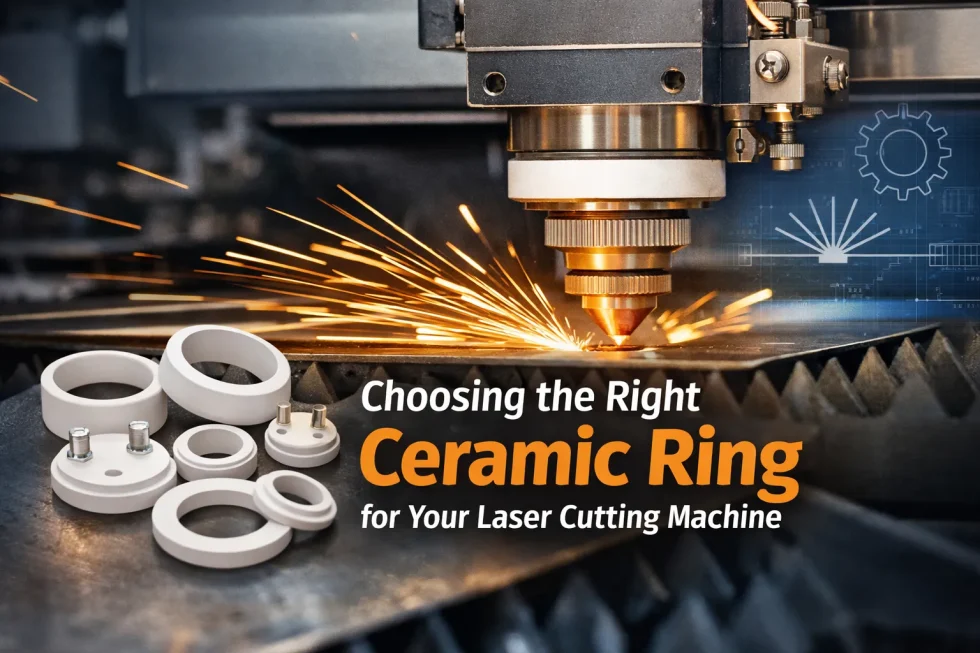
Laser cutting machines are built for speed, accuracy, and repeatable results. While most users focus on laser power, optics, and software, one small component plays a major role in protecting the cutting head and maintaining stable performance, the ceramic ring. Selecting the correct ceramic ring is not just a maintenance task, it directly affects cutting quality, machine safety, and long-term operating cost.
This guide explains how ceramic rings work, why selection matters, and how to choose the right type for your laser cutting machine based on real industrial conditions.
Ceramic Rings for Laser Cutting Machines
Ceramic Rings for Laser Cutting Machines are insulating components installed between the laser cutting head and the nozzle. Their primary role is to electrically isolate the nozzle from the cutting head body while maintaining precise alignment during operation.
In fiber laser cutting, the nozzle is extremely close to the workpiece. Any accidental contact with metal sheets can cause electrical feedback. The ceramic ring prevents this current from damaging sensitive internal components.
Key functions include:
- Electrical insulation between nozzle and cutting head
- Mechanical support for precise nozzle positioning
- Protection of cutting head sensors and electronics
- Contribution to stable height sensing during cutting
Because ceramic rings operate in high heat, high vibration, and dusty environments, material quality and dimensional accuracy are critical.
Fiber Laser Ceramic Rings
Fiber Laser Ceramic Rings are specifically designed to handle the operating conditions of fiber laser systems. Compared to CO₂ lasers, fiber lasers produce higher beam density and operate with faster acceleration and deceleration.
These conditions place more stress on consumable parts, including ceramic rings.
Important characteristics of Fiber Laser Ceramic Rings:
- High dielectric strength to prevent electrical short circuits
- Thermal resistance to withstand reflected heat
- Low thermal expansion to maintain nozzle alignment
- Smooth surface finish for proper sensor response
Using a low grade ceramic ring in a fiber laser machine can lead to unstable height control, frequent alarms, and unexpected shutdowns. This makes fiber laser specific ceramic rings essential rather than optional.
Laser Cutting Head Ceramic Rings
Laser Cutting Head Ceramic Rings must match the exact design of the cutting head they are installed in. Different cutting heads such as Raytools, Precitec, WSX, and BOCI use ceramic rings with different sizes, mounting styles, and electrical contact designs.
When choosing Laser Cutting Head Ceramic Rings, always verify:
- Inner and outer diameter
- Height and thickness tolerance
- Contact pin configuration
- Compatibility with single or double nozzles
Even a small dimensional mismatch can cause nozzle tilt, uneven gas flow, or inaccurate height sensing. Over time, this leads to poor edge quality and increased nozzle wear.
High quality ceramic rings are precision machined to tight tolerances, ensuring consistent nozzle positioning across long production runs.
Ceramic Rings for Fiber Laser Machines
Ceramic Rings for Fiber Laser Machines must support continuous operation under demanding industrial workloads. Many fabrication shops run machines for multiple shifts, cutting stainless steel, mild steel, aluminum, and copper.
Under these conditions, ceramic rings face:
- Constant thermal cycling
- Mechanical vibration from rapid head movement
- Metal spatter and fumes
- Frequent nozzle changes
A well selected ceramic ring reduces downtime by maintaining stable cutting head performance. It also protects expensive components such as capacitive sensors, control boards, and focusing optics.
Choosing ceramic rings based only on price often leads to early cracking, insulation failure, or sensor errors. For fiber laser machines, long service life and consistent insulation performance matter more than short term savings.
Industrial Ceramic Rings for Laser Cutting
Industrial Ceramic Rings for Laser Cutting are manufactured using high purity alumina ceramics. Alumina offers a strong balance of insulation strength, heat resistance, and mechanical durability.
Advantages of industrial grade ceramic rings include:
- Stable electrical insulation at high voltage
- Resistance to thermal shock
- Low wear during repeated nozzle installation
- Consistent performance in high duty cycles
These ceramic rings are tested for dielectric strength and mechanical integrity before use. In industrial environments where machines operate continuously, this level of reliability is essential.
Shops cutting thick plates or reflective materials benefit the most from industrial ceramic rings, as these applications generate higher thermal loads and reflected energy.
Ceramic Rings for Laser Nozzle Protection
Ceramic Rings for Laser Nozzle Protection play a direct role in preventing damage during accidental nozzle collisions. When the nozzle touches the workpiece, the ceramic ring absorbs part of the mechanical and electrical impact.
This protection helps:
- Prevent short circuits during sheet contact
- Reduce damage to the cutting head body
- Protect height sensing systems
- Limit the spread of electrical current
In many machines, ceramic rings work together with capacitive height sensors. A damaged or contaminated ceramic ring can interfere with sensor readings, causing unstable cutting height and inconsistent kerf width.
Regular inspection and timely replacement of ceramic rings ensure that nozzle protection systems continue to function correctly.
How to Choose the Right Ceramic Ring
Selecting the correct ceramic ring involves more than matching size. Buyers should evaluate the following factors carefully:
- Machine and Cutting Head Compatibility: Always confirm that the ceramic ring matches the exact cutting head model. Using a generic ring may fit physically but fail electrically or mechanically.
- Material Quality: High purity alumina ceramics offer better insulation and longer life compared to mixed or low grade ceramics.
- Dimensional Accuracy: Precision machining ensures proper nozzle alignment and stable gas flow.
- Electrical Insulation Rating: Ceramic rings must withstand the operating voltage used for height sensing and collision detection.
- Application Type: Machines cutting thicker materials or reflective metals require more robust ceramic rings.
Common Problems Caused by Wrong Ceramic Ring Selection
Using the wrong ceramic ring can cause multiple operational issues, including:
- Frequent height sensor alarms
- Poor edge quality and inconsistent kerf
- Increased nozzle wear
- Electrical faults in the cutting head
- Unexpected machine downtime
Many operators mistakenly troubleshoot software or sensors when the root cause is a worn or incorrect ceramic ring.
Replacing ceramic rings as part of routine maintenance prevents these issues before they affect production.
Maintenance and Replacement Guidelines
Even the best ceramic rings wear out over time. Signs that replacement is needed include:
- Visible cracks or chips
- Burn marks or discoloration
- Unstable height sensing
- Frequent collision alarms
Best practices include:
- Inspect ceramic rings during every nozzle change
- Keep spare ceramic rings in stock
- Clean rings regularly to remove spatter
- Replace rings immediately if insulation damage is visible
Proactive replacement costs far less than repairing a damaged cutting head.
Why Ceramic Ring Quality Impacts Long Term Cost
While ceramic rings are relatively low cost components, their impact on machine health is significant. Poor quality ceramic rings often result in:
- Higher maintenance costs
- Shorter nozzle life
- Reduced cutting consistency
- Increased risk of cutting head failure
High quality ceramic rings protect expensive components and support stable machine operation. Over time, this reduces total cost of ownership and improves production efficiency.
Final Thoughts
Choosing the right ceramic ring for your laser cutting machine is a practical decision that affects safety, performance, and cost control. By understanding how ceramic rings function and selecting the correct type for your machine and application, operators can avoid unnecessary downtime and maintain consistent cutting results.
Ceramic rings may be small components, but in modern fiber laser cutting systems, their role is essential. Investing in the right ceramic ring ensures reliable operation, cleaner cuts, and longer machine life.
For product support and technical guidance, contact at +91 8866608444 or mail at info@lasercart.co. You can also visit our website at www.Lasercart.co to know more.