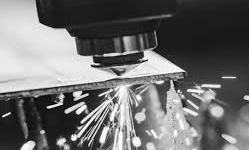
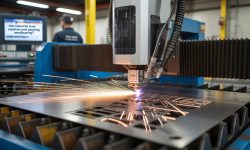
Introduction: Precision Meets Power in Structural Steel Cutting
In the world of modern fabrication, C-channels and I-beams are the backbone of construction, machinery, automotive frames, and heavy equipment manufacturing. These components require high precision, clean edges, and structural integrity, which are difficult to achieve with traditional cutting tools like plasma, oxyfuel, or mechanical saws.
Enter the fiber laser cutting machine – a technology that has revolutionized how industries cut and process thick, long, and heavy steel members. From smooth edge quality to superior speed and automation, fiber lasers are the smartest, cleanest, and most efficient solution for cutting C-channels and I-beams.
In this blog, we’ll explore how to cut C-channel and I-beam using a fiber laser machine, why laser technology is superior to conventional methods, and what key factors to consider for perfect results.
What Are C-Channels and I-Beams?
Before diving into the cutting process, let’s understand what these structural components are.
C-Channel (Channel Beam)
A C-channel is a type of structural beam with a C-shaped cross-section. It’s commonly used in:
- Truck chassis and trailer frames
- Machinery and equipment frames
- Construction and modular structures
- Support frameworks
I-Beam (H-Beam or Universal Beam)
An I-beam (or H-beam) has an “I” or “H” shaped cross-section, providing excellent load-bearing capacity. These are widely used in:
- Building and bridge construction
- Industrial cranes and supports
- Steel frameworks and platforms
- Heavy-duty structures
Both of these are typically made of carbon steel or stainless steel – materials perfectly suited for fiber laser cutting due to their reflective yet manageable surfaces.
Why Use a Fiber Laser Cutting Machine for C-Channel or I-Beam?
Fiber lasers are designed to deliver high precision and high productivity, even for thick, reflective, and complex materials.
Here’s why industries prefer fiber lasers for cutting C-channels and I-beams:
1. High Precision
Fiber lasers achieve micron-level accuracy – ideal for intricate cuts, bolt holes, or profile trimming on C-channels and I-beams.
2. Smooth Edge Finish
Unlike plasma or oxy cutting, fiber lasers produce burr-free, oxidation-free edges, eliminating secondary finishing.
3. Faster Cutting Speed
Fiber lasers can cut up to 3–5 times faster than CO₂ or plasma cutters – even for thick materials like 10–25 mm steel beams.
4. Contactless and Clean
No physical contact means no tool wear, reduced maintenance, and minimal thermal distortion – perfect for long and heavy beams.
5. Automation and Accuracy
Modern machines like SLTL’s Long Chassis Laser Cutting Machine (XLS) integrate CNC control, IoT sensors, and vision systems, allowing automated loading, alignment, and cutting of 12-meter C-channels in just 3 minutes.
How to Cut a C-Channel or I-Beam Using a Fiber Laser Machine
Let’s break down the process step-by-step for clarity.
Step 1: Prepare the Material
- Inspect the beam – Ensure the C-channel or I-beam is clean and free from rust, oil, or dust.
- Mark alignment points – Identify cut zones or reference points if needed for precise cutting.
- Secure the beam – Place it on the laser machine bed using rollers or clamps to prevent movement during cutting.
For long beams (like 6m–12m), automated roller conveyors and centering systems – such as those in SLTL’s Long Chassis Laser Cutting System – help position the part precisely.
Step 2: Choose the Right Fiber Laser Settings
Proper laser parameters depend on material type, thickness, and edge quality desired.
Example Settings (for Mild Steel):
| Material Thickness | Laser Power | Cutting Speed | Gas Used |
|---|---|---|---|
| 6 mm | 2–3 kW | 4000–6000 mm/min | Nitrogen |
| 12 mm | 4–6 kW | 2500–4000 mm/min | Oxygen |
| 20 mm | 8–12 kW | 1500–2500 mm/min | Oxygen |
Tips:
- Use Nitrogen for stainless steel or aluminum to prevent oxidation.
- Use Oxygen for carbon steel to improve cutting penetration.
- Optimize focal length to ensure uniform energy distribution along the beam’s surface.
Step 3: Set Up the Laser Path and Software
Most fiber laser machines use CNC or CAD/CAM software for programming.
- Import your part design or DXF file.
- Define the cutting path for flanges and webs (the top and bottom of C/I beams).
- Add holes, slots, or trimming lines as needed.
- Use nesting software to minimize material waste.
- Simulate the tool path before execution to avoid collision or misalignment.
Machines like SLTL XLS come with smart vision alignment and 4-axis control (X, Y, Z, A) for easy angle and edge cutting on long members.
Step 4: Execute the Cut
Once parameters and paths are ready:
- The laser head focuses the high-energy beam on the target line.
- The machine begins cutting with real-time motion control, adjusting feed rate based on material thickness.
- Integrated sensors detect temperature and beam focus to maintain consistent quality.
In advanced systems, IoT monitoring allows operators to track performance data, laser intensity, and production efficiency remotely.
Step 5: Unload and Inspect
After cutting:
- Use automated rollers or conveyors to unload the beam safely.
- Inspect the edge finish – it should be smooth, clean, and burr-free.
- For mass production, use automatic unloading systems (like in SLTL XLS) to save time and labor.
Advanced Machines for C-Channel and I-Beam Cutting
SLTL XLS – Long Chassis Laser Cutting Machine
For large-scale industrial applications, SLTL’s XLS Fiber Laser System is engineered to handle:
- Up to 12-meter-long beams and sheets
- C-channels, I-beams, and large profiles
- ±0.05 mm/m accuracy
- Automated loading and unloading
- Cuts and unloads a 12 m C-channel in just 3 minutes
This machine integrates smart fixture handling, vision systems, and IoT-based monitoring, making it a benchmark in long-member fabrication.
Best Practices for Cutting C-Channels and I-Beams
To get the best results, follow these professional tips:
- Use Proper Fixtures – Support long members with rollers or V-blocks to prevent vibration or sagging during cutting.
- Calibrate Beam Focus Regularly – Regular calibration maintains accuracy and avoids distortion at varying thicknesses.
- Maintain a Clean Lens and Nozzle – Contaminated optics can cause power loss, uneven edges, or burn marks.
- Optimize Cutting Gas Flow – Too much or too little gas pressure can lead to dross (melted metal buildup) or poor edge quality.
- Keep Software Updated – Modern fiber laser software often includes performance optimizations for structural steel cutting.
Advantages of Using Fiber Lasers for Structural Steel
| Feature | Fiber Laser Machine | Traditional Cutting |
|---|---|---|
| Accuracy | ±0.05 mm/m | ±1–2 mm |
| Speed | High | Moderate |
| Maintenance | Low | High |
| Material Waste | Minimal | More |
| Automation | Full (IoT/AI) | Manual |
| Edge Finish | Clean, burr-free | Rough |
| Operational Cost | Lower in long term | Higher (gas, tools) |
Fiber laser machines not only enhance quality but also reduce operational cost and material waste, making them ideal for smart manufacturing environments.
Conclusion: Laser Technology That Redefines Structural Cutting
Cutting C-channels and I-beams requires more than brute strength – it demands precision, consistency, and control. With the advent of fiber laser technology, manufacturers can now achieve:
- Faster production cycles
- Superior edge quality
- Fully automated handling
- Consistent accuracy for even the longest and thickest beams
Machines like SLTL’s Long Chassis Laser Cutting System are setting new global standards for long-member fabrication, helping industries cut faster, cleaner, and smarter.
So, whether you’re cutting a 12-meter truck chassis, a heavy I-beam, or a complex steel frame, fiber laser technology gives you the edge – literally and figuratively.