Introduction
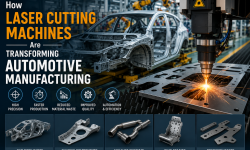
Laser cutting technology is transforming electric vehicle (EV) component production by delivering unmatched precision, repeatability, and throughput. As OEMs and Tier suppliers race to improve range, reliability, and manufacturability, laser cutting has emerged as a core manufacturing process for battery enclosures, motor parts, busbars, chassis brackets, and thermal management components. This article explores how laser cutting integrates into EV supply chains, the benefits it brings, material considerations, real-world applications, challenges, and future trends.
Why Laser Cutting for EV Components
Laser cutting is especially well-suited to the demands of EV manufacturing because it can handle a wide range of metals and thicknesses while maintaining tight tolerances and clean edge quality. Key selling points for EV producers include:
- High precision for complex geometries and fine features
- Fast cycle times for both prototyping and high-volume production
- Minimal mechanical contact, reducing distortions and tooling wear
- Compatibility with automation and inline quality inspection
SEO Keywords
Laser cutting, electric vehicle manufacturing, EV component production, precision cutting, battery pack, busbar cutting, motor stator, automotive laser cutting.
Benefits of Laser Cutting in EV Production
Precision and Repeatability
Laser cutting delivers micron-level precision that is crucial for components such as battery frames, motor laminations, and sensor mounting plates. Repeatability reduces assembly rework and ensures consistent performance across thousands of parts.
Design Flexibility
Complex contours, perforations for cooling, and lightweight lattice structures can be produced without costly tooling changes, enabling rapid design iterations and weight reduction strategies important for improving EV range.
Material Versatility
Modern laser systems (especially fiber lasers) can cut steel, stainless steel, aluminum, and—using appropriate strategies—copper and brass. This allows manufacturers to standardize on a single process for many EV components.
Cost and Throughput Advantages
While initial capital investment can be significant, laser cutting reduces per-part labor, secondary machining, and scrap. High-power lasers increase throughput for high-volume EV production runs, improving cost per part.
Key Applications in Electric Vehicles
- Battery Enclosures and Modules: Precise cutting of module trays, cooling channels, and enclosure panels for tight tolerances and leak-free assembly.
- Busbars and Battery Tabs: Laser cutting and automated handling for copper busbars and nickel-plated battery tabs, optimizing electrical conductivity and fit.
- Motor and Inverter Components: Stator laminations, rotor housings, and structural brackets requiring accurate profiles and minimal burrs.
- Thermal Management Parts: Fins, heat exchangers, and coolant passage plates produced with intricate patterns to improve thermal performance.
- Lightweight Structural Parts: Chassis brackets, seat mounts, and body-in-white components where weight reduction and strength are balanced through optimized cut patterns.
Technical Considerations for EV Component Laser Cutting
Laser Type and Power
Fiber lasers are increasingly the default choice for EV metals due to high electrical efficiency, excellent beam quality, and suitability for reflective metals. CO2 and disk lasers still have niche uses depending on material and thickness. Power selection depends on material type and thickness—higher power for thicker sections, lower power for fine features.
Material-Specific Strategies
- Aluminum: Good thermal conductivity requires higher power and optimized focus; watch for burring on thin sheets.
- Copper and Brass: Highly reflective; requires specialized optics, wavelength selection, and sometimes pulsed or ultrafast lasers to avoid reflectance-related damage.
- Stainless and Mild Steel: Well-suited to fiber lasers; oxygen assist can improve cutting speed for thicker sections.
- Composites and Coated Metals: Require attention to fumes and delamination; often combined with fume extraction and inline quality inspection.
Edge Quality, Heat-Affected Zone, and Post-Processing
Control of focus, feed rate, and assist gas minimizes the heat-affected zone (HAZ) and reduces dross. In many EV applications, laser-cut parts have minimal post-processing, but critical components may still need deburring, stress relief, or surface treatment.
Automation and Integration
Robust integration with CAD/CAM nesting software, automated part loading/unloading, vision systems, and robotic cells enables high uptime and traceability—a must for automotive-quality production and ISO/TS process control.
Quality, Inspection, and Traceability
Inline inspection using machine vision, laser probes, and coordinate measuring systems ensures dimensional accuracy and identifies defects early. Barcode or RFID marking during cutting supports part traceability across assembly and testing stages.
Challenges and How to Mitigate Them
Handling Reflective and Heat-Sensitive Materials
Copper and highly reflective alloys can reflect laser energy and damage optics. Mitigations include special coatings, high-speed motion systems, pulsed lasers, beam shaping, and protective windows.
Distortion and Residual Stress
Thin, large panels (like battery trays) can warp during cutting. Strategies include fixturing, progressive cutting sequences, low-heat processes, and automated clamping systems.
Fume and Particulate Management
Battery-related materials and coatings produce hazardous fumes. Effective local extraction, filtration, and compliance with environmental and workplace safety regulations are essential.
Real-World Examples
Manufacturers have reported converting stamping and punching lines to laser cutting for smaller batches and complex parts, shortening lead times for prototype battery modules. Busbar production lines using laser cutting plus automated bending and welding have improved electrical connectivity and reduced assembly steps. Motor stator laminations produced by lasers show better edge quality and reduced magnetic losses compared with mechanical shearing.
Future Trends in Laser Cutting for EVs
- Higher-Power, More Efficient Lasers: Enabling thicker cuts at higher speeds and lower operating costs.
- Ultrafast and Pulsed Lasers: For precise cutting of copper and advanced alloys with limited HAZ.
- Hybrid Processes: Combining laser with waterjet, plasma, or additive steps for novel part geometries.
- AI-Driven Process Optimization: Machine learning to tune cutting parameters in real time for reduced scrap and increased throughput.
- Greater Automation and Digital Twins: Full shop-floor integration for predictive maintenance, energy optimization, and traceable quality control.
Conclusion
Laser cutting technology is a strategic enabler for EV component production, offering precision, flexibility, and throughput needed to meet the sector’s demanding performance and quality targets. With ongoing advances in laser sources, automation, and materials processing strategies, laser cutting will remain central to efficient, scalable EV manufacturing. Suppliers and OEMs that adopt optimized laser cutting workflows can expect faster development cycles, lower lifecycle costs, and improved product performance.
Call to Action
For engineering teams considering laser integration, start with a materials audit and pilot projects that benchmark precision, cycle time, and downstream assembly benefits. Collaborate with laser integrators to choose the right laser type, automation level, and inspection strategy to meet automotive quality standards and drive EV innovation.